01
eBay
The original ACEO marketplace and still one of the largest. Auctions and fixed-price listings; search the term "ACEO" directly.
An ACEO is a miniature work of art made to one fixed size — 2.5 × 3.5 inches, the dimensions of a trading card. The letters stand for Art Cards, Editions & Originals. Here's everything that means, why the size matters, and how ACEOs differ from their close cousin, the ATC.
ACEO = Art Cards, Editions & Originals. It describes any piece of art created at the standard trading-card size of 2.5 × 3.5 inches (63.5 × 88.9 mm). That fixed footprint is the only hard rule — everything else is open.
An ACEO can be a watercolour, a pen-and-ink drawing, a colored-pencil portrait, an acrylic or gouache painting, a pastel, a collage, or a fine-art print. It can be representational or abstract, finished in minutes or laboured over for hours. As long as it lands at 2.5×3.5 inches, it qualifies.
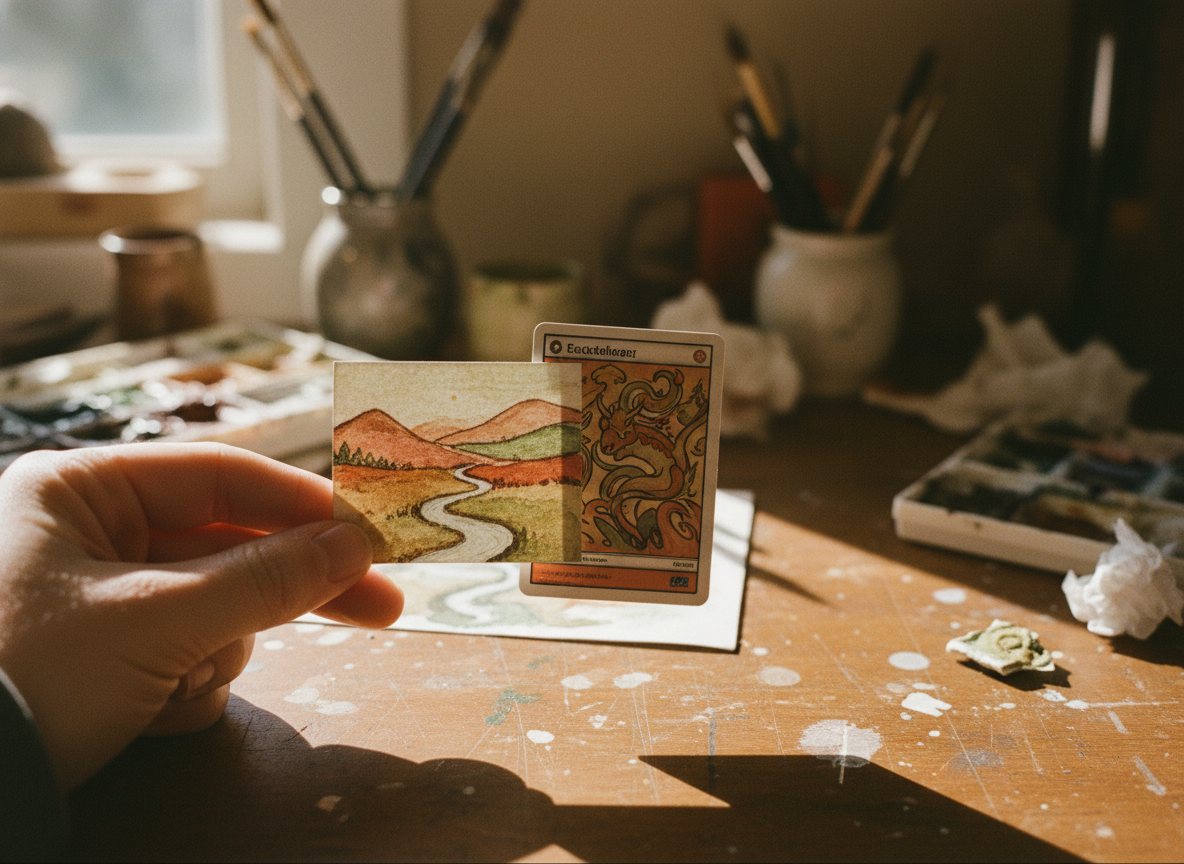
The fixed format isn't a limitation — it's the shared language that makes the whole community work.
A quick note on orientation: an ACEO can be portrait (vertical) or landscape (horizontal) — the 2.5×3.5 footprint is what's fixed, not which way up it sits. Many artists keep a small jig or pre-cut template so every card comes out identical.
Need the exact numbers? See the full ACEO size guide — every unit (inches, cm, mm), pixel dimensions by DPI, and how to cut to size accurately.
This is the single most-asked ACEO question. The cards look identical — the difference is in what you do with them.
The "EO" — Editions & Originals — signals commerce. ACEOs are created specifically to be bought and collected, on eBay, Etsy, artist websites, and at art fairs. Pricing, photographing, and shipping are part of the craft.
Artist Trading Cards came first. They're swapped hand-to-hand at organised trading sessions — the rule of the movement is that they are exchanged, not sold. The reward is connection and a growing collection of others' work.
In short: same 2.5×3.5 size, different intent. Many artists make both — they trade ATCs with friends and sell ACEOs to collectors.
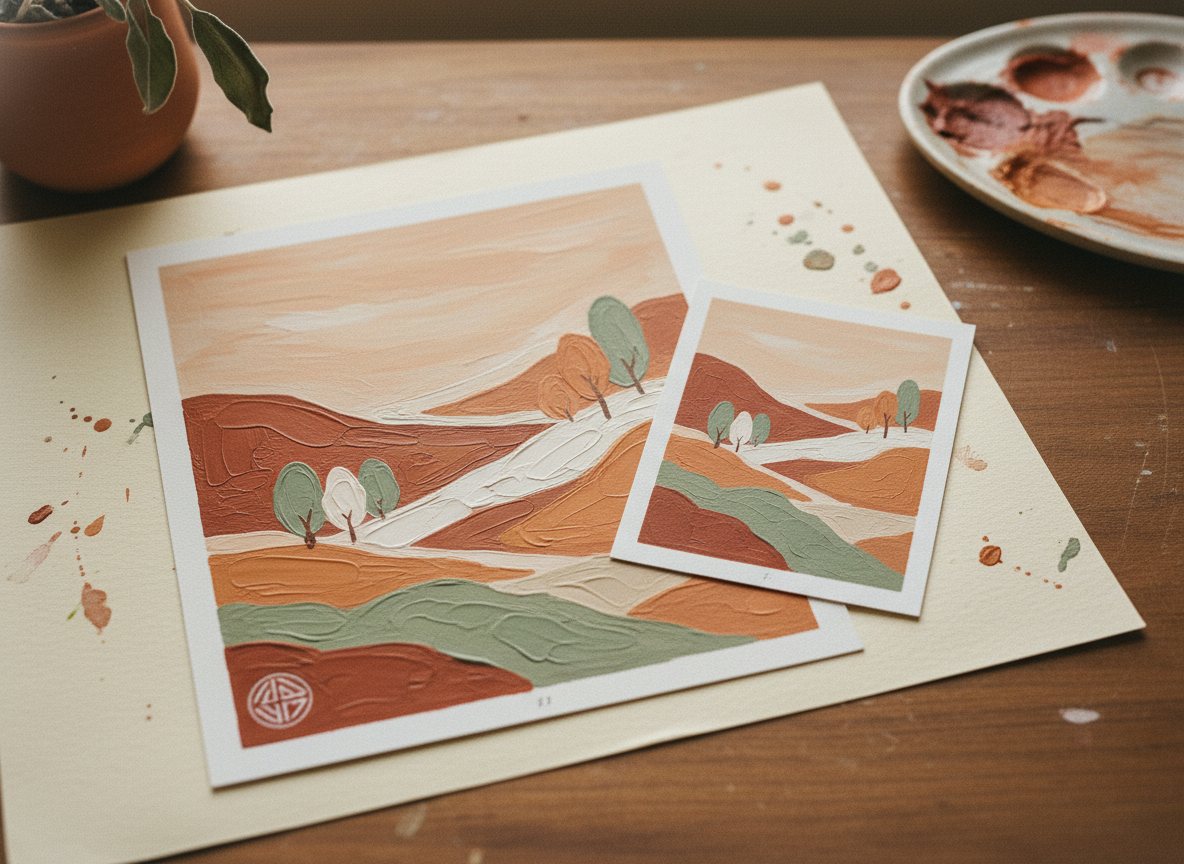
The same artwork can exist as a single original or as a small run of prints. Knowing which you're buying — or selling — matters.
Swiss artist M. Vänçi Stirnemann hosts a trading session in Zürich, asking visitors to make and swap small cards. The Artist Trading Card movement spreads internationally.
The 2.5×3.5-inch trading-card dimension becomes the shared standard — small, postable, and compatible with existing card sleeves and binders.
Artists begin listing trading-card-sized art for sale online. To keep the spirit of the format while allowing commerce, the term ACEO — Art Cards, Editions & Originals — takes hold.
ACEOs thrive on eBay, Etsy, artist sites, and at fairs — an accessible, affordable way to collect original art and a friendly on-ramp for new artists.
ACEOs change hands in a handful of well-worn places. Each has its own feel.
The original ACEO marketplace and still one of the largest. Auctions and fixed-price listings; search the term "ACEO" directly.
Popular for both originals and print editions, with shop-style branding and repeat collectors.
Many artists sell directly via their own shop, Instagram, or Pinterest — no marketplace fees.
In-person tables where collectors flip through binders and buy on the spot. Great for building a following.
The ATC tradition of trading cards hand-to-hand continues, online and at meetups — community over commerce.
Some trading-card and collectible shows welcome ACEO artists alongside sports and gaming cards.
You've got the definition down. Next: pick a substrate, cut to 2.5×3.5, and put paint to paper. Our step-by-step guide walks you through it.