01
Watercolour
A small pan or tube set in artist-grade pigment. A limited palette of warm/cool primaries plus an earth tone goes a long way at this scale.
You need surprisingly little to make and sell ACEOs — and most of it you may already own. Here's what each category does, what to look for, and the storage and packaging that protects your cards.
Note: all product mentions below are generic and illustrative — we name material types and qualities to look for, not specific brands to buy.
Your surface sets the ceiling on everything else. Choose a stock that suits your medium and survives the post.

You can start with what's in the drawer. As you grow, quality pigment makes small work sing.
A small pan or tube set in artist-grade pigment. A limited palette of warm/cool primaries plus an earth tone goes a long way at this scale.
For opaque, vivid colour. A handful of tubes and a white is plenty. Acrylic doubles as collage glue and sealer.
Waterproof, lightfast (pigment) ink in fine liners or a dip pen. Waterproof matters if you'll add a wash on top.
Wax- or oil-based pencils for layered detail; soft or oil pastels for painterly colour. Buy lightfast where you can.
Small art rewards small, well-kept tools. None of this needs to be expensive.
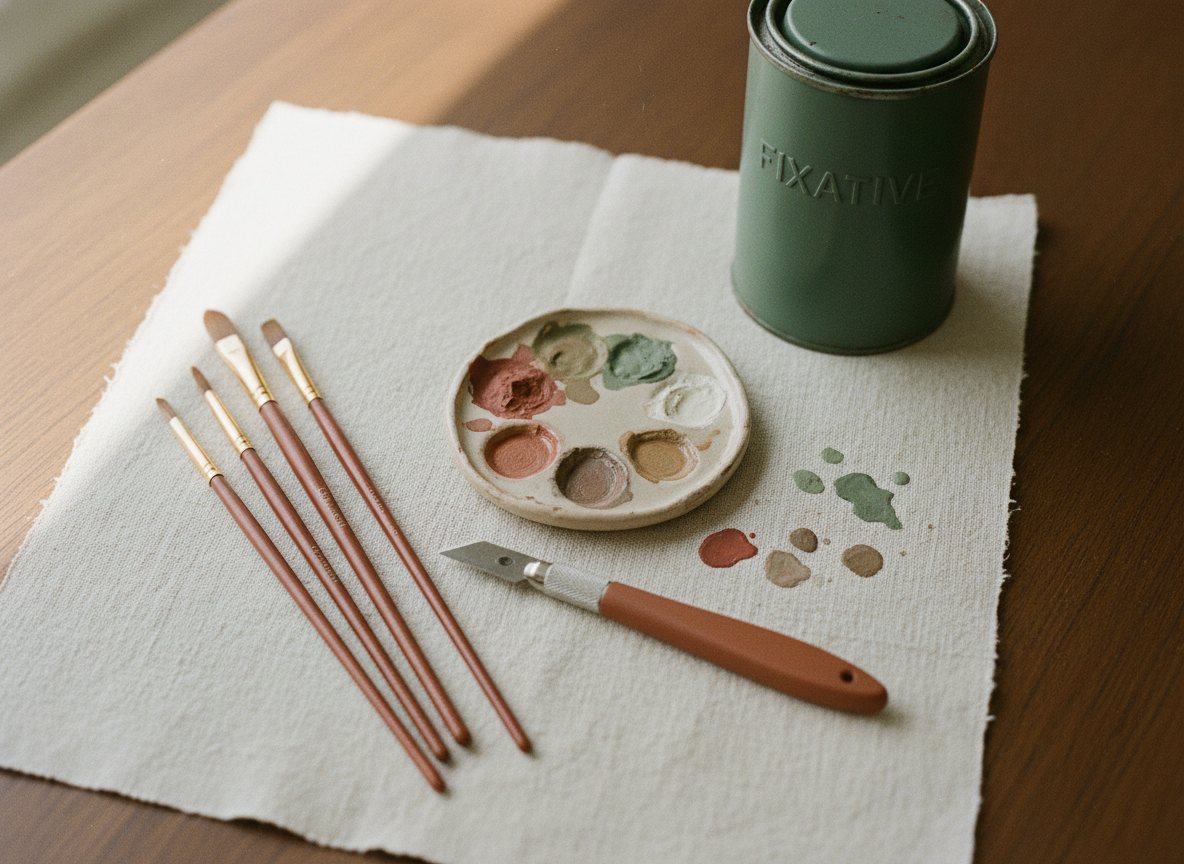
The right finish keeps delicate media from smudging on the journey to its new home.
This is the bit borrowed wholesale from the trading-card world — and it's why the 2.5×3.5 size is so practical.
Thin "penny sleeves" that slip over a card to guard the surface from fingerprints and scuffs. The first layer, always.
Hard plastic holders sized for standard cards. A sleeved card slides inside, fully protected from bending. Essential for shipping.
9-pocket archival pages turn a ring binder into an instant display and storage system for a growing collection.
Card boxes and dividers keep inventory organised by medium, theme, or status (for sale / sold / personal).
Trading-card frames and tiny easels let buyers display ACEOs as the small artworks they are.
Choose archival, acid-free sleeves, pages, and boxes so cards don't yellow or degrade over the years.
An ACEO that arrives bent is a refund and a bad review. The fix is cheap and simple.

Everything you truly need to make and ship your first sellable card.
You've got the gear. Learn the step-by-step in our how-to, or jump straight to pricing, photographing, and shipping your work.